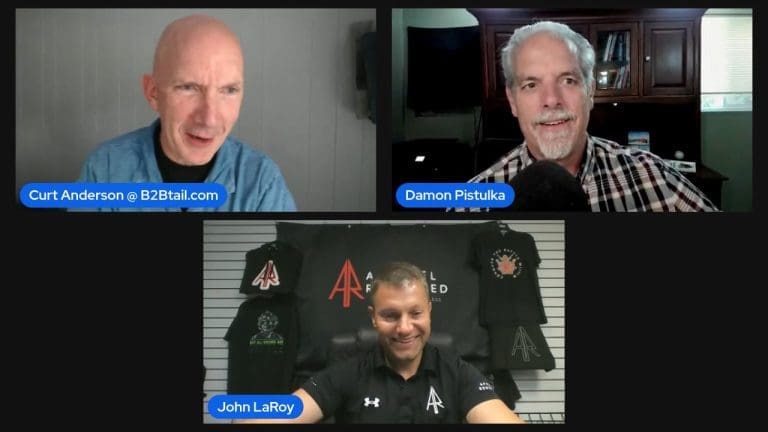

In this episode, John LaRoy, CEO of Apparel Redefined, sits down with Brian Slater, founder of New City Moving, to explore his incredible entrepreneurial journey. Starting with just a $10,000 investment in 2009, Brian grew the company to an impressive 375 employees and $26 million in revenue, completing 18,000 moves along the way! Brian dives into the strategies behind his success, emphasizing the power of exceptional customer service, uniform standards, and building lasting relationships with vendors. He also shares insights into his leadership style, including transparency, team engagement, and profit-sharing.
John LaRoy adds his expertise on scaling a business and praises Brian’s innovative approach. Together, they unpack key lessons for young entrepreneurs, like learning from industry experts and keeping an eye on the bigger picture for long-term success.
Key Highlights
• Brian Slater’s Entrepreneurial Journey: Early Challenges and Opportunities 0:02
• Building New City: Initial Struggles and Successes 51:25
• Leadership and Team Building 51:38
• Partnerships and Long-Term Relationships 51:53
• Advice for Young Entrepreneurs 52:09
Presentation Transcription
Curt Anderson 00:02
Hey, John LeRoy, dude, what’s going on, man? I’m watching. Are you Curt? Oh, my goodness gracious. If I was doing any better, John, you might have to call 911, it’s going to get, it’s going to get, it’s going to get nasty on this conversation. So alright, guys, we’re here with Apparel Redefined. You know, we come at you at Week in, week out, just with the latest greatest. What’s going on in apparel with my dear friend, John LeRoy. My name is Curt Anderson, and man, I hope you’re sitting down for this one. Whatever you’re doing, you’re out walking the dog and doing your thing, you’re going to be juiced for this conversation. So we’ve got none other than one and only Brian Slater, Brian, how are you brother?
Brian Slater 00:36
Hey, what’s up guys? Thank you for having me. Well, let’s really excited to be here with my good old buddy John. I am my new buddy Curt. That’s right. So
Curt Anderson 00:45
I now, John, I didn’t sleep a week last night. I don’t know about you, how did you get a good night sleep? For this
John LaRoy 00:50
one, I never sleep. I’m trying, you know, like, Yeah, I’m trying
Curt Anderson 00:53
to figure, how can I outsource sleep? You know, it’s like getting in the way of like getting production done. So let’s absolutely
00:59
well Weekend at Bernie’s give it a shot, you know.
Curt Anderson 01:04
But all right, let’s dive in. So John, I’m gonna, I’m gonna hit up Brian first, but we’re gonna zigzag, because I’m gonna hear, like, how you guys came together, Brian, let’s go back in time a little bit, okay, to my understanding, as a young hop in the Time Machine, he is a young man. I did this, like, high school thing was, like, like, kind of an inconvenience. Do I have that right for you? Like, this high school thing, right? I
Brian Slater 01:25
think, I think in in the formal diagnosis, went back and really call HD, ADHD, they just kind of called me, so it was kind of like just out of my mind. ADHD and school really wasn’t the thing for me. I could probably make it past the first two periods, but after the first 10 days, I just, I decided to part ways and and and try something else.
Curt Anderson 01:53
Okay, so, so the I’m
Brian Slater 01:55
not recommending it to any viewers out there. If you’re on, that’s right,
Curt Anderson 01:58
that’s right, you know, right. Like, like, don’t, don’t, do, you know, don’t do as I say, not as I did. My
Brian Slater 02:03
wife has two master’s degrees, so as long as my kids are somewhere between GED and two master’s degrees, I’m, I’m completely in for that. You’re, you’re
Curt Anderson 02:11
golden. So well, at least you got through the first two periods, all right? So high school, to my understanding, just kind of not your jam, right? And I tell you, this is a great story right here, because, like, you know, so we’re trying to really drive so many kids feel so obligated. I know it’s cliche now, but you know, college tuition kids are, you know, drowning in debt, that type of thing. There’s so much opportunity in the trades. Now, I caught a story where I love like you, actually, if I’m not, I know, maybe it was a newspaper way back in that day, but you saw a classified ad, if I’m not mistaken, just walk us through. How did you start your entrepreneurial journey? Take us there.
02:47
I did. So right after leaving high school, I’m probably I gotta put ahead a year in school when I was younger, so I’m probably 13 or maybe 14 by that time, and I actually use a Photostatic copier in order to falsify a work permit. And I go to work my first day at the Burger King on the corner of Southport and Fullerton. For everybody familiar, that was sort of where my where my work history began. And it turned out that, you know, fine dining and working in a restaurant atmosphere wasn’t for me. So So I string together a series of jobs that were what I would consider be knock around jobs. I worked at Office Max, I worked at, you know, a couple of retail places, and then I saw this ad in the NAT newspaper, which is a local Chicago sort of paper that covers a lot of different neighborhoods, and it says unlimited earning potential. Try rewarding career and moving company sales at the time, let’s just say that it wasn’t in the financial position for our family to ever hire movers. So I didn’t even know what a mover was. So I answered this ad, unlimited earning potential sounds really good. I think, right, when you’re, you know, 17 years old, that sounds really good. So I was like, I’m just going to wing it, and I’m going to give this a shot. I ultimately end up working for these guys for about, I would say, about a year, and they switched to an all commission model from a sort of hourly draw model. Hourly commission draw model. It turns out that, like, I think, in the better part of 10 days, they ended up owing me, like a $5,000 commission check. They were unable to come up with the money. After that year, I had recognized who the talent was in that organization. At the ripe young age of 18, I knew everything, and it just so happened, moving was one of those things are probably the only thing that I knew. So I decided to take my take my talents elsewhere. I started my own company at 19, which was a call center for moving companies, where if John’s phone. To ring, or if Curt phone were to ring, it would ultimately lead to us, and we would sell that job on your behalf, using your authority, just like if John were to forward his phone to me today, and I was taking orders and trying to upsell people on hoodies and premium brands, almost something like that. So then and then at 24 I’m doing sort of the sales thing. I’m realizing that a lot of the companies that we’re working for, we’re charging a pretty high rate for, like, the sales that we’re providing. So I I, I see that, like, a lot of the estimates that we’re giving are fluctuating, but it’s not the result of our professionalism or accuracy and estimating. And I’m like, I really want to control this process, start to finish, so I can give people something better. So I think it was like an old style truck, or a Miller High Life truck, or some truck. No, maybe it was like old style an old style truck was driving past my office, and I saw that it had like the old style logo with a big Chicago flag. And I’m thinking like, Man, if I could combine my love for my city I was born and raised like Logan Square area in Chicago. So if I could combine, like, my love for my city with something that I know really well and moving, although I don’t know anything about the trucking and and the labor portion, let’s just give this shit a whirl. So I took $10,000 out of a savings account that I had. I used $5,000 to buy my first truck from a dude that needed a hip replacement and needed money for his for his co pay, and I use the other $5,000 half for rent and half for the first week’s payroll, and New City was born. And I think it was August of 2009 August of 2009
Curt Anderson 06:53
Nice. Okay. So, alright. So it started thanks to a hip replacement. Is that what you’re saying?
Brian Slater 06:58
Yeah. So the dude, the dude from the cabinet making company, I think it was in Indianapolis or close. I go there the trucks is listed for much more than I’m much more than I have, but I have this money in an envelope. So I’m speaking with this guy, and like, I sort of get a feel for him. And then we take out, like, 5000 of the $10,000 and I just, like, put 5k in my pocket, I leave the other 5k in the envelope, and I go to the guy, like, Look, dude, all I got is this five grand. I know the truck is 12, but like, you’re selling your business because you need a hip replacement. I understand that you need to do this copay thing. How much does this cost? He’s like, five grand. I was like, shit. It just so happens I have five grand. Do you want to sell this truck? And he’s like, I like, you kid. You got some guts to you just make sure this truck goes on and and lives a future life and makes another American entrepreneur some more money. So he sort of like took a flyer on me, and I think up until our last day, I think we still have that, that beautiful Hino truck.
Curt Anderson 08:00
So and what a great kind of a pay it forward, like he said, maybe saw himself and you, you know, a younger self, and just really took a bet on you, and he was in a tough situation, so it turned out to be a win win. And but really sounds like, you know, out of graciousness of his heart, really kind of helped you out there,
Brian Slater 08:17
absolutely, yeah, that was pretty pivotal moment, right? If you don’t buy that truck, do a you know, like, the more I time that people have, the more I time ideas have to linger inside of your minds, the more that your your brain kind of tells you that you can’t do it. So I’m glad that things went down the way that it did. I’m glad that I took the risk the first 10 years were utterly fucking brutal. I don’t recommend it to anybody. I’m not sure that most, if most human beings don’t have the stomach to have a bad day at their nine to five, Monday through Friday. Like, try this shit. Like, this is some real, this is some real, like, 80 hours a week starting to feel like part time. This is some real stuff here, but I think John knows that’s what it takes to like all of these books. About three hour work week, five hour work week. It’s all like, at some point you’ll have diminishing returns when you’re exhausted and you’re just like, sitting at a desk and nothing is really coming out. But more times than none. The person that’s passionate about their product, the person that’s dedicated to their product, and the person that’s willing to go the extra mile, those are the type of success stories I hear more than more than not.
Curt Anderson 09:33
Yeah, John, what do you what are your thoughts here in Brian’s origin story here
John LaRoy 09:39
amazing. You know, I’ve heard, I haven’t heard everything. I’ve heard, you know, different parts of that, of that journey, but it’s motivating. It’s also like, you know, I know Brian, you go to conferences without moving titans in the moving industry, and we talk, you know, other people in our industry is. Especially, like both of us are in service based industries, with, you know, a very blue collar workforce, and it’s not sexy, right, you know, and there’s no focus on the non sexy work. But guess who was essential? You know, you needed to wear clothes during COVID, and people were still moving during COVID, right? And a whole bunch of other industries. And there’s such a Darth of manual, good, reliable labor in the United States like it’s kind of, you know, we talk about what has become my passion. It’s not really making T shirts anymore. It’s, it’s bringing a focus of manufacturing back into United States and solid careers, not just jobs, right? Because Brian’s proven that you can provide careers to people in moving and he’s elevated tons of people inside his inside of his company, from, you know, hourly to a career level and much more. And going through college, you know, I held on a little bit longer, just mainly to play sports. But you’re, you’re being prepped to be a cog in someone else’s wheel. And, you know, very early on, I actually, I didn’t even go become part of someone else’s wheel. I just knew that, like, if I’m going to do the type of work that the type of effort that’s required to be successful, I’m not going to do it for someone else. I’m going to do it for myself. And, yeah, you ain’t kidding. It’s not for everybody. And I feel like there’s a disingenuous story being told right now where, like anyone can do it, quit your day job, start your business. And we always talk about the beginning and the end are all that’s talked about, but 99% of that messy middle no one talks about because not many people make it to the end.
Brian Slater 11:42
I think a lot of people in business are just looking for that kill shot right now, or that silver bullet right and just doesn’t exist. There is no scan the Internet, scan Tiktok and Instagram for 1000 years, and try to find a sustainable, get rich quick idea. Because if you found it that simple and it came to you that quick. It’s either going to leave that quick or the next guy’s going to do it better than you. So for me, it’s like I saw him moving as like, Let me think about this. It’s not capital intensive. It gives me an opportunity to help people, which I really enjoy. It gives me an opportunity to be my own boss, and I’m not competing with Elon Musk, Warren Buffett and Jeff Bezos. Let’s, let’s give this a shot.
12:27
Yeah, so
Curt Anderson 12:28
Brian, so let’s dive in there. Okay, so it’s 2009 you buy your first truck, and we’re gonna, I’d like to take a deep dive, because I really take us
Brian Slater 12:37
back. I’m not sure that I remember Curt, what I ate for dinner last night, but I’m gonna try my best. You might do. I’m going to try my best to go back in the archives for you. Just even make up stuff. I think my wife made tacos, by the way, so it’s all coming back to me now,
Curt Anderson 12:48
good. All right, all right. God bless your wife for making tacos, right? So I just had it for lunch. That’s all I remember, even if they make up stuff. So you buy your first truck, okay, now with, All right, moving, you know, everybody is that’s an industry like, you know, in manufacturing, you know, I have a lot of clients that I work with. I have no idea what they do. People basically understand what moving is, right? Somebody, everybody, for the most part, is moved. Whether you rally up your your buddies, your friends, your family, they’re like, you know, also everybody ghosts you when you need to move. So then you need, oh, yeah, Brian, right. So take us there. So you get your first truck. Do you start hiring? Like, walk us through the process in those first couple years. Yeah,
Brian Slater 13:27
get my first truck. What I actually assume that movers should be wearing on the job while we’re on the segment of apparel is definitely not what these guys want to wear. So like, day one I have these, like, three clean cut guys that I found I’m like, we’re gonna wear these Dickey style button ups. We’re gonna, like, effectively, like, if somebody were to go to Cintas and just point in the catalog and be like, I want that blue thing. That’s effectively what our guys were wearing on day one. I just, I had the assumption that, like, coming from the sales and marketing background, I had a completely different it’s a rude awakening. These guys just need, like, some moisture wicking, dry fit shirts. And that’s like, completely it. Anyways, where this story is going is, I get these three guys, we kind of do this photo shoot. I end up making enough money to wrap this truck. And it’s sort of just like, we completely screw the pooch and hit back into somebody’s garage on the very first move of New City. And I don’t know what you call like that, like sill or like that top of the garage, but yeah, we knocked out. Like, I think it was 25 or 26 bricks from the top of that garage, and I knew right then and there that I had my work cut out for me, but there was never a dull moment. So we continue to write it out. I see in a lot of groups, like for Facebook, in like for entrepreneurialism, business moving. I see like everybody gets to pretty much like some scale in their company, whether it be like. Five employees, 10 employees, and they’re like, Wow, I need to start thinking about a general manager. I was the complete, complete, like, 180 degree of like, I’m going to run this thing day to day, relatively, all by myself, with the assistance of like, one or two sales reps and office manager, until we get to, like, 125 employees or something. So for that first 10 years, if I, if I had to look back now, we’ve had a great amount of success, and I sold the business in March 9 of last year. We could have done it so much faster by getting a loan from a bank to buy trucks instead of using the money from the first truck to buy the second, the money from the second truck to buy the Third, the money from the third and fourth to buy the fifth and the sixth. We could have accelerated that so much faster. We could have accelerated the business so much faster by getting an SBA loan. We could have bought a warehouse much faster by going out and getting a commercial building loan. But really, like, I have zero regrets about rolling up my sleeves and doing things the hard way, because it ensured that, like, I’m conversational on 99.9% of basically every application side of the business, with the exception of, like, maybe a fleet mechanic and HR, I sort of know the moving business like the back of my hand, almost like the movie The Rain Man, like, almost on an obsessive level. And it really gave me the opportunity that, like, I didn’t get myself in a position that I wasn’t ready for, or that I didn’t earn my stripes for, like I was exactly where I needed to be based on the sweat of my brow and, like, how hard it worked and what I knew so I didn’t just go out and, like, blow it up and risk. There was never a risky part of the business, I think, like we were talking before John hopped on. I think that the story of my life is a story of, like, cumulatively hitting singles my entire life, and just out scoring the opposing team by just wearing them down. Basically, like, I say, one truck became two. We were primarily moving DePaul students, Northwestern students, and college moves at the time. And then, like, I’m glad that as I start to think about another business to get into, I find myself thinking about 1000 things that I never would have thought of before, and I need to talk myself out of being risk adverse, right? It’s like, well, what about product market fit? Or like, are we sure that the consumer base is there? What’s the persona of the consumer? It’s like, No, we were running a gunning in 2009 it’s like, I think we’re going to move college kids. But it turns out that we’re really good at moving people out to the burbs that are getting married and combining households or having kids. It’s also really good that we’re we also turns out that we’re really good, after time, at moving six bedroom mansions, right? So, like, just jump in there. Let the let the consumer base decide what they need. Carve out what your niche is inside of that need, and just write it till the wheels fall.
Curt Anderson 18:10
Alright, so I want to dive in. I just want to give everybody little scope of I’m throw I’m going to throw some numbers out. Okay, so in 2009 started with a $10,000 investment, you completed 1800 moves. Then 13 by 13 years later, you had 375 employees, a fleet of 130 trucks, 18,000 moves. Dude like
Brian Slater 18:31
how I think they’re tops out at like 26 million in revenue. 26
Curt Anderson 18:37
million revenue. So I have a bunch of questions I’m going to hit you with first one, was there a point in time where you’re like, you know what? I think I’m making it like. Was there never, like, when you never like scrap, like you’re a bare knuckle entrepreneur? Never, never you like you constantly, not not for one second, not see constantly, not for one
Brian Slater 19:00
second. I never, I never took and it’s actually for the worst, and I’m not proud of it, and I don’t wear it on my sleeve, right? But, like, it was always sort of a situation by which, like, I I’m critical of myself when it comes to things that I don’t do, but things that I do. I have so many ideas and so many things that I want to do on deck that I don’t waste my time sort of reveling in the success that I’ve had, because it’s really like in regards to my lifestyle. Yeah, I own my home now, and I drive with suburban now, right? But like I was driving, I was living in a studio apartment and driving a $600 minivan. The wrap cost $1,500 and the van cost 600 like completely. But it turns out that if you wrap a $600 clunker with a $1,500 wrap, no, it’s it’s like lipstick on a pig. But it worked, right? Not that I’m recommending people to buy $2 shirts and embroider them with $15 worth of embroidery. I. Um, but there’s never been a time other than like when I sold my business, I think me and my wife went out to dinner, like when it was all said and done. But there’s never been a time where I was like, reveling the way that I explained my success is that, like when you look in the mirror every day and you’re gaining weight, you don’t actually notice your weight gain. But if you were to not look in the mirror for a year and you were to gain 10 or 15 pounds, you would start to say, Oh, my chin is less chiseled, or like, my arms are a little bit more flabby, right? I was just looking in the mirror every day, so you don’t actually see that success. Also, I was so determined to know everything about the business and to do it masterfully. For better, for worse, I wasn’t reaching out to any peer groups. I wasn’t I don’t have like, a business person that I looked up to or aspired to be. I wasn’t, like, going to chamber meetings or something like that, like I was so I was so focused, and I had, like, my own queue of things that needed to be done that I never really looked for outside mentorship influence or anything like that. I just kept it was just like
Curt Anderson 21:23
chugging along. Well, let’s, I want to dive into leadership, okay? Because basically, you know, regardless, you know. And we could dive into this, you know, if you’ve been in accounting service, or if you’ve been selling products or widgets, or, you know, you chose moving or moving, chose you however that works, right? And like you said, you’re like Rain Man level of just like, completely obsessed with moving right. What do you like talk? You know, when you build up a team, you go from like, three dudes that you know, you go from you the three dudes you built up 375 employees. That takes like, you know, you have to have a exceptional leadership ability. You have to right? And I know you’re very humble, modest guy, but just for other entrepreneurs out there that are hearing this, like, Man, I want to do that. I want to build a thriving company, just share a little bit like, what were some things that you felt maybe went right? Or, like you said, I didn’t have a lot of mentorship, didn’t do the networking groups. Like, what was it in you that were was able to, like, get this, this calling, this following to build up hundreds of employees, you know, eight figure company in moving just, just share a little bit on your leadership, maybe, uh, skills, uh, philosophy, like, what was, yeah,
Brian Slater 22:32
I think that a lot of my background and driving force for, like, the things that I do in my life come from being raised by a single mom on welfare. So I think that there was such a I think that there was such a fear of of holding a cardboard sign under a bridge, that I think that really like this isn’t like a story of like drug use or this isn’t a story of like being in prison for attempted murder, right? Like this is just a story of like a kid from Chicago whose parents maybe didn’t make some of the right decisions, and who landed themselves in extreme poverty and understanding what it wasn’t like to eat two or three nights a month like that. That’s really where the story begins, and why that driving force never really goes away. Because it’s like even after I did sell my company, there’s always this idea of, like, this can all go away tomorrow. And like, if you have it in the market and you really don’t spend that much, it’s not going away. So that’s number one. Number two, by the grace of God, I had a really humble beginnings, and I think that regardless of what level I got to in my head, I’m always like the Dollar Menu Kit. So I never really outgrew that. So I think that I treat people how I want to be treated. I never had an idea. I’ve never been a big fan of hierarchy in companies, or, like, titles. I think that we had them. So like, when John comes through the door, he understands who he should talk to in regards to purchasing or, like, Curt, if you are doing some company investments for us, you know who to go to to the CFO. But like, internally, we knew that, like the cleaning lady named wana that cleaned for us, right? Like, if we had all these amazing employees on the phone doing sales, or these amazing employees in dispatch, these amazing movers, that if that office weren’t clean, we could not attract some of the best and brightest talent. So it’s like just really looking in the fact of like we live in an ecosystem, and just understanding that everybody has their role, their role to play inside of that ecosystem, I think was, like, really imperative. And then there became a time, probably three or four years before I sold the company where I went from like very transparent to almost like. Fully transparent. What do I mean by that? When I started, I had a small pizza so I could only give you and John a slice, and because I would still need enough to feed myself. But as the company grows and as the pie grows, it turns out that you have, like, an extra large pizza, and you can give away more slices on that. So what? What did I do? I gave away profit share to some of my key managers. And people that were extraordinary became Extra Extra Extra extraordinary by having that little bit of skin in the game that they could determine their own outcome. It really was the decision maker between, like, let’s get those fuel cards and save the three cents. I know it’s going to take time for me on a Saturday, but let’s go ahead and do that. Or let’s go ahead and bring back that rental truck on a Friday night when we don’t need it on a Saturday, so we don’t get charged for an extra day. So it’s all those like, I really noticed the company start to soar. I got a story, and I’ll make this quick, but I got a story about when I met my CFO Bill raspy. And during that time, my wife was giving birth to our my first daughter, five years ago, and and I really needed some renewed faith in the company in regards to our growth track, because we had always grown like 30% year over year, sort of compounded and and then you go from like 1800 moves to you just go from like a million dollars to $26 million in revenue. And that’s looking back. I never really realized that we were as large of a company, or like one of the largest, if not the largest, if not the largest, in the Midwest, because I didn’t really, I didn’t really view it in that way. But I remember Bill telling me, like, Yeah, I’ll, I’ll sign on with you. I love what you’re doing. I love how your customer focused. I love your interactions with the employees. I love that you’re not a a like a phantom owner, right? Or what’s that called, Phantom ownership, or something, absentee owner, I’m glad that you’re not an absentee owner, he said, so let’s give this a shot. So that night, I recall sending an email out to my team to advise them that we were low on, like, post it notes and toilet paper, and I had actually dropped a link and was like, shopping for, like, what the best deal on two ply was, and then I had sent them an email about, like, let’s get the yellow posts in those because those are the easiest to read. And I think that the dark blue ones are, like, they’re a little bit hard when you write them black. And this dude’s like, hey, when I signed up to be your CFO, like, I didn’t sign up to work with somebody that like, like you’re smart enough that you’re a visionary but you don’t have faith in yourself, like you think that you’re a fraud. And I was like, maybe in some ways, like I never really so then he’s like, guess what? You’re like, a visionary leader. Focus and double down all of your time of your time of being a visionary leader, and let’s double the sizes business and stop worrying about what toilet paper and what post the notes and I, and I made that change, and I think our company doubled within the next you know, we were, we were doubling the size of the company almost for for quite some time, right up until the end there. And I started working on the business, and not in the business, but I worked in the business for 10 years, like day in, day out.
Curt Anderson 28:32
Yeah, big transition going from working in it, John, let’s get you on stage here. Thoughts of what you’re hearing so far from Brian,
John LaRoy 28:40
no, I mean, I can attest to it. I mean, going to visit him before the catastrophe. I mean, that’s, that’s a hell of a story, but in itself, on the wall or the building next door collapsed into his beautiful office space, complete renovation. But I mean, it beautiful, like, I mean, it’s like boiler room, but a much nicer version, where they had their bullpen. And there’s Brian, you know, he’s when I met him, I think the first time that had be like 2018 19, maybe 17 18, in there. And, you know, I hear about him through I actually, I saw him on a podcast, really, or a Q and A with Matt laris. And then one of the guys I was using for some projects around here, for concrete, I think, did your parking lot, Damian Valdez, and he’s like, Hey, Brian. And so I kind of use both of those to kind of get my foot in the door with Brian. I actually on the podcast with with Larry. See you talk. He asked you, like, Who or what superpower could you have, right? And I think you said, forgot the name of the movie, but you’re you would love to have the power where, like, you could just download a book information without reading.
29:52
Oh, yeah, that Short Circuit with Johnny, yeah. So that guy, where he goes like this with the book. I love that scene.
John LaRoy 29:59
So I. Him Johnny 5t shirt, and I sent it, oh, yeah. And that’s kind of like how it all started, but yeah, I mean, going to visit him numerous times, seeing him there, down in the bullpen, right? You know, shoulder to shoulder with people, and then in the dispatch room, you know, like, I feel like a lot of people, especially entrepreneurs, consume a lot of their content this way, right? This is who I trust. This is what I listen to. I can relate to it. But there’s always that element of, is he bullshitting, or is she bullshitting? Did she actually do that? And I mean, man, I can tell you, like seeing Brian, and that’s why, like, I valued any time I get with him, because there’s not many people, especially in a service based industry where you, you know, you are so reliant, like you talk about leadership, man, like, when you get to that level, you cannot do anything without people, and it’s the hardest thing to manage and lead, especially in Chicago, you know, in big cities, there’s, there’s options, you know, like, It’s different than a small town, you know, 500 555
Brian Slater 31:03
movers, right?
John LaRoy 31:05
So, yeah, I mean, it’s, it’s amazing, because even today, when you say, like, you know, you haven’t participated in mentorship groups, you haven’t done that. Like, I’m struggling with that right now, because I feel like, Oh, am I at the point where I need to, but it’s like, but then that takes away from like, 15 other things that I can be doing. And I feel like it’s the same thing, man, I just resonated with, like, am I a fraud? Like, why would I go to this when I haven’t done anything? And then, you know, if you look what you’ve done, look what you’ve done, it’s like, I really haven’t so, yeah, it’s, it’s,
31:33
I know it sounds super vulnerable, but dude, I just didn’t realize, and I don’t want to say that I’m like, Mensa or something, right? But I didn’t realize that, like all of those little tips, tricks, hacks, shortcuts, all the knowledge that I’ve had regarding all these different disciplines of business, like I didn’t know that this had conversational sort of crossover to so many different industries. Like, if you can run something like a like what John’s doing, or you could run a moving company, it’s like, man, there’s not a whole hell of a lot of industries that aren’t comprising of moving, right? You got like, Okay, well, hiring and labor is tough. Maintaining a big fleet of trucks is tough. Hiring salespeople are tough. Massive marketing plan is tough. Working with dispatchers and the relationship that they have with Movers is tough. Uh, reading a, P and L is tough. Uh, maintaining Human Resources is tough. An occupation where people could get injured every day is tough. Um, so we just, like, run the gamut. And this thing is really like, if you can make it in moving, you can make it what do they say? There’s a saying about New York, if you can make an I’ve been to New York twice. I’ll stick with Chicago. But if they say, like, if you could make it in moving, I think you can make it anywhere, because it’s just so multi disciplined. But I didn’t know, like, when I meet John and we’re talking about ideas, and he’s giving me advice, and I’m giving him advice. It’s like, Man, there might be some, I might have picked up some general crossover stuff here throughout the years. This is, this is interesting. Yeah,
John LaRoy 33:13
it’s interesting. Like, we’re developing, like, parallel things like you, you know, one of the things that sets industries and people like us apart is, you know, you can either run from tech, you can over embrace it, or can use the right amount, right and you develop, you know, your scorecard, we were at the same time developing a scorecard. We’re still working on, still improving it. But yeah, like, I feel like, what set you guys apart? Obviously, your service, your reputation, the marketing too. I mean, like, your logo, your trucks everywhere, and your branding, you know? I mean, like, Hey, you’re not only your guys driving those trucks are all wearing the same stuff. They look great. They’re professional. They do what they say. You say what they do, what they say, say what they do. And trying to replicate that is very difficult, right? You know, everyone after you was a follower. You know, you became the leader. Just doing what you did, it wasn’t really anything like exceptional in your mind, but everything you were doing is exceptional in the marketplace. And that’s it’s really a testament to what you did and how you did it in such a short amount of time. Man,
Brian Slater 34:20
I mean, I appreciate that, man. We’re just it’s absolutely years and years, years and years of trying to reverse engineer exactly what the customer’s looking for. Yeah, if, if all of it at some point too, is, like, really self serving for the business, right? Like, okay, John and his wife want somebody to come to their house. I assume that they would want those people to be in uniform. So what do I do? Right? You let your staff members that don’t wear a uniform or don’t show up in uniform, you let them know. Like, Hey, dude, the jeans that you’re wearing are like, 80 or $90 I’m sure you damage them frequently on moves like, let me provide you with these uniforms. And you never have to worry about that again. And it’s like, holy cow. That makes sense. Also, if you show up in those uniforms, the gratuities that the customers will give you will be higher. Also, if you show up in those uniforms, if you do accidentally damage something, it’ll look like an accident, because you’re a professional mover, instead of it just looking like I picked you up at Home Depot, and now the customer is going to call and nitpick for every little scratch on a piece of furniture. So there’s like compounding effects to something as simple as a uniform, and understanding that it all starts with, like human behavior and understanding what consumers want. Like, I really don’t give a damn what Chick fil A is doing. Like somebody wants to be in a uniform. I’m sure they’re doing some great stuff over there. Yes, ma’am, no, ma’am. But like, there was a level in 2009 where all I needed to do was just hit the basics. Nice people that that that want to help the customer, that show up in uniform, that we’re paying two or $3 above scale. We’re paying 100% benefits for every employee in the company out of pocket. Why would you we’re making it hard to want to work somewhere else. When you lose your job at new city, like you send me a nasty text, and you go online to Facebook and say, this company stinks, but everybody knows at the end of the day that, like, there is no gold at the end of the rainbow, or the grass isn’t greener. We know that you’re just envious because you decided to stop at a liquor store while you’re on the job or something, right?
36:31
Yeah, definitely. Alright,
Curt Anderson 36:33
Brian, so I want to hit this dude. I’m just, I’m really intrigued. So, you know, just such a bare knuckle, street smart entrepreneur. It’s like, and I and again, very humble guy. You probably won’t admit it, but like, you have innate ability. There’s people that have, you know, college MBAs. They, you know, work at corporate. They get an entrepreneurship and just, it goes nowhere, right? It just whether, I’m not saying it, I don’t know if it came naturally to, you know, typically four majors in a business school, right? You’ve got finance, operations, HR and marketing, okay? Of those four, 2009 you throw on your your New City hat and fly your colors, you got three people through your tenure journey. Which one of those four Do you feel that you that you really shined in the most like, do you feel like it was the just attention to detail with the customers? Do you feel like you had a you’re a marketing guru, you were just super phenomenal with your finances? Like, how did you build the success? You separated yourself into the pack 550 competitors, like, dude. Like, we can’t overstate of like, what you’ve accomplished here, right? I think
37:42
so everything has its place in certain different aspects of the business. I think, like, we’ve always thought of technology as a way to assist human beings in streamlining operations. So whether that, like, we never really replaced at the same time that everybody was looking to have an online form that would quote what your move is going to cost. We were actually, like, going in the complete defiant opposite direction, and been like, if there’s so many people that just have these generic, stale forms, what if we just got on the phone and said, Yes, ma’am, no, ma’am, we’re here to help. Like, wouldn’t that be something and like, so, so I, I think that that was, I think, I think treating people, treating people like you want to be treated, and an advanced idea of technology and the role that plays in business was, like, the the starting point, or like, the big Bang for us. And then in regards to marketing, I think, like I was working 10 – 12, hours a day and studying SEO Moz or SEMrush or Warrior Forum or so, I was studying all this marketing stuff for an excessive amount of time. I knew that if I sold people when they were really young, the the happy meal, I knew that they would be back when they graduated college for the double cheeseburger, and I knew that when they got married and went to the suburbs, that they would be ready for the Big Mac. So like we had that vision from day one that the life cycle of the customer was more important than just a one time, one and done, we’re going to get you with that extra 50 bucks. So we always provided value in everything we did, because we saw a consumer as not just one move, but a series of moves, or a series of opportunities over time. Everything that I learned on a P and L, I would say, came midway through later on in my career, I would say, at the early years, were just like running the business in a scarcity model, and not wanting to spend a bunch of money on unnecessary labor, or like unnecessary administrative when we really when we really didn’t need it. Or. Wouldn’t see, see gains. So I think we were so lean for the first 10 years that, like, the finances worked themselves out. Because we we were, we were charging people fairly, but we weren’t pissing out. The other end, the marketing stuff came naturally, but marketing is sometimes like a feel, if you go to Marketing School, like I grew up remembering being two years old, three years old, four years old, in the inner city, going to the thrift store with my mom, and, like, seeing somebody that was maybe schizophrenic, and I thought to myself, like, how am I going to get myself out of this situation if something goes wrong here, and you just, like, combine all those little micro events, maybe 10,000 happened to me when I was a kid. And you combine all those things, and you get really good at, like, just having a gut feeling for what somebody wants on the opposite end, whether that be a relationship, a friendship, a business acquaintance, a customer. So I just got really good at sort of understanding what people are looking to get out of the out of the transaction, and then, just like, I guess loving what you’re doing while at the same time, like a little bit of it, has been an abusive relationship with moving, but I kept coming back, and in the end, it worked out, and we were able to me and moving, were able to figure it out, and we didn’t get a divorce, but we both married rich and decided to go our separate ways.
Curt Anderson 41:39
Nice. What a great so let’s, let’s go here, and we’ll start winding down partnerships. It takes, you know, I would say it takes a village to raise a child. You have two wonderful kids. It sounds like it takes a village to raise a business. We’re here with our dear friend John and apparel redefined as far as like partnerships. Maybe like you’re the folks you purchase all your vehicles from, maybe, I don’t know if you had temp agencies, your partnership with apparel redefined what was, what were the partnerships? How important were they to your success aligning with folks like John?
Brian Slater 42:11
Yeah, I would say the person that I was buying boxes from, or the person that, in this case, at apparel, redefined that I was that I was buying uniforms from right? I saw the relationship as being I have to shop John once a year to keep him honest. I have to shop the Box Company once a year to keep them honest. But I don’t need to blow a relationship over a couple pennies or a couple dollars, because the relationship of knowing that John will show up at my doorstep with a box of shirts if I really tell him that I’m in dire straits, the fact that I’m paying $20 more for that box, when that gentleman says, You know what, I’ll have it there to you In an hour I’m going to drive over, is like it’s penny wise, pound foolish for me to go overseas, buy those shirts, wait for them to come in a shipping container that are $20 cheaper and less quality, and blow the relationship with John, because I know that this dude will come through for me in a pinch when I need him. It’s stupid for me on my box vendor when I could get a roll of shrink wrap $1 cheaper and I can save myself $1,000 but it’s going to end up the not having the product on the floor when I need it is ultimately going to end up costing me $3,000 it’s hard to find vendors and partners that you can trust, and if you find those people, keep them honest once a year, right? Like nobody should go unchecked, but like I was making it as close to a friendship and as close to a partnership and a relationship as possible with my vendors, and just making sure that I was setting up that checks and balance, just to make sure that things hadn’t fall off the rails, but I trusted people until I had a reason not to. And for people like John, people like my box vendor, people like my attorney Patrick, there was never a funny penny in there, and I that game we hope to keep going at times when things get difficult, knowing that I had people in my corner.
Curt Anderson 44:24
God, this is a great conversation. John, what are your thoughts here as we start winding down? What’s going through your mind?
John LaRoy 44:31
No, I just think back to like, how we met. And, you know, you walk into a situation, whether it’s a referral or, you know, cold like that. And you can tell when people are genuine. I think Brian, you know, you talked you touched a little bit about like intuition, right? Where you have that intuition over a series of series of 1000s of events, of knowing what that person wants, either to hear or the outcome as you described it. And you can also sense bullshit, right? And. You deal with that a lot, you know, because people are shopping you. If they want to go move and they got 549 other options, they’re definitely shopping you. But yeah, looking at the customer as a long term, you know, endeavor in partnership, like, especially in the city, right? You know, you have that entire life cycle of that customer or moving in for, you know, post college or college, and then somewhere else in the city, post college, and then married and move out to the suburbs or somewhere, you know, in a more domesticated area of the city. I think that’s, you know, obviously looking at that too, like Pennywise, pound stupid, or whatever the similar, pound foolish, yep, pound foolish. It’s just a long term view. And not many people are willing to look at long term view because their horizon is super short term. It’s the immediate gratification, not only of just the deal, but of the day, right? Like, Oh, you know, I gotta do this today. So I think it’s, it’s rare to find, like, that long term outlook in everything that you do, you know, whether it’s for me now, as you know, I’m gonna say a new father of a four year old and two year old, but it’s like, I look at things that I’m doing now, and, yeah, I can get them to shut up by putting on a TV show. But like, is that impacting their future? You know, for the next week beyond that, it might give them immediate gratification that’s going to impact their ability to develop as a human as you know, young man. And as you get older and you go through this, you know, you see all these parallels, right? Curt, you’re a baseball guy. We talk about baseball as micro microcosm of life, same thing running a business, you look at like, you know, the four different important areas of running the business, they’re all interdependently important. And like Brian said, like, when you’re doing this on your own for a long time, you can speak to 99% of almost all of it. And I think it’s really important now there is a point, like, when you hire your CFO. I’m not there yet. That’s where, like, where we’re at right now, 18 years in, I struggle on the P and L side, right? And it’s like, you have to be able to get to that point to get better at it, right? And it’s, it’s not like, certain like, hey, if I’m, if I’m trading stocks, you don’t want to pull a mystery lever, you know, yeah, I better be good at that from day one, because that’s my business, but it’s just really dependent on on the industry you’re in and and what you’re doing, but from a relationship based, man, I just want to say thank you. Like, I know you’re super busy, but I really, you know, even though we’re about the same age, I really look up to I mean, you are taller, and that’s that’s not hard at hard doing around me, but no, I just appreciate your
Brian Slater 47:40
I’ll sit down every time we talk from now on, John, if that’s what it takes to earn your friendship, I’ll I’ll sit and we can talk, but I gotta say this to the viewers out there, right like, Call me old fashioned, but I want to pay 10 or 20 cents additional for a shirt knowing that I’m sending his two year old and four year Old to college instead of funding some mega corporation overseas, right? Like, that’s just, I think, I think we’ve kind of gotten away from that as as as a country and as a group of people. And, like, I know that every time that I had a relationship with my box vendor or my attorney or or John, right, like, nobody, I always left a little bit on the table, because I want those I just I never want somebody to walk away feeling like they got had. Because how long, how many times can I do that to John until he says, No, it’s Friday afternoon. Do I really want to pick up the phone for this guy? You know what I mean, like, what would it cost me over my life? I paid maybe a couple 100 bucks to John over what I would have paid for some cheap, commoditized product. But the dude picked up the phone for me, and it felt nice that both people were doing something to support their families, and it was a win, win. And like, you don’t always have to get your way 100% like, if I, if I beat this guy up so hard and it’s not financially worth it in order for him to do business with me, like, how enthusiastic is he going to be? So like you, you have to understand that, like, much like, I need to take care of and support my family. Like, don’t beat up people, especially like people on your level, like me and John are are, you know, don’t beat up people so hard that you’re taken away like John’s a dude that just needs to support his family too. I think we’re all in this together.
Curt Anderson 49:34
We’re all in it together, man. We’re stronger stronger as we bond together. So Brian, alright, dude, we’re going to start winding down. Man, I guess we are going to wind down. First off, I want to this was a gift, true master class for myself. Anybody listening to this? This? I mean, go back. Hit the replay button. Just play it over and over. Brian, let’s close out with this. Words of wisdom, parting thoughts, maybe, uh. See 19 year old Brian, 24 year old Brian with $10,000 in his pocket, having no idea whatsoever what the future holds. 60 seconds or less, what advice would you give yourself? Or that young entrepreneur? Maybe it’s even a seasoned entrepreneur starting out for the first time, best business advice that you would love to pass along
Brian Slater 50:19
I would give, I would tell my 19 year old self, if I didn’t have direction, I would find an industry that I was interested in. I would go to work for that person for a summer or maybe an entire year for free, just to, just to learn the industry inside out from somebody that that that is master level in that industry, I would digest everything that person could possibly give me, and then I would go out and execute it to the best of my ability. We’re
Curt Anderson 50:53
just chatting. We’re just going to drop the mic on that. We’ll just, we really shouldn’t say anything else. We’ll just end on that right there. So Brian, I want to give a heartfelt thank you to you. I want to send a congratulations to you, your wife, your family, for just a sponsor, success, wonderful exit with your company again, guys. Brian Slater started with 10,000 bucks in his pocket, bought a truck, built it up. 375 employees, 20 plus, $26 million moving business, 550 companies, competitors, and he was top, top dog. So Brian, commend you. We look up to admire you, respect you, wish you massive, massive. I can’t wait to see what your next venture is, because I know I can just see it, dude, I see it in your eyes. You got something cooking. We’re going to have you back on the show, John, and we’re going to see what, Brian, What? What? What’s the next industry that Brian’s going to disrupt, right? Well? Or, what do they say? Or die trying, or die trying, man. So thank you guys. Thank you, John. We’re good to close out. You’re ready to close this baby out? Yeah?
John LaRoy 51:53
Yeah. Excellent. Awesome conversation. Yeah. Alright,
Curt Anderson 51:57
hang out one second, Brian. We’re going to stop recording. So guys, again, stop by Pearl redefined, visit John his team. We wish you guys, whatever time you’re catching this just a wonderful, amazing day. And man, I’ll tell you, if you need inspiration again, connect with Brian or just hit the rewind button on this thing. This was pure gold. So alright, guys, we’ll.