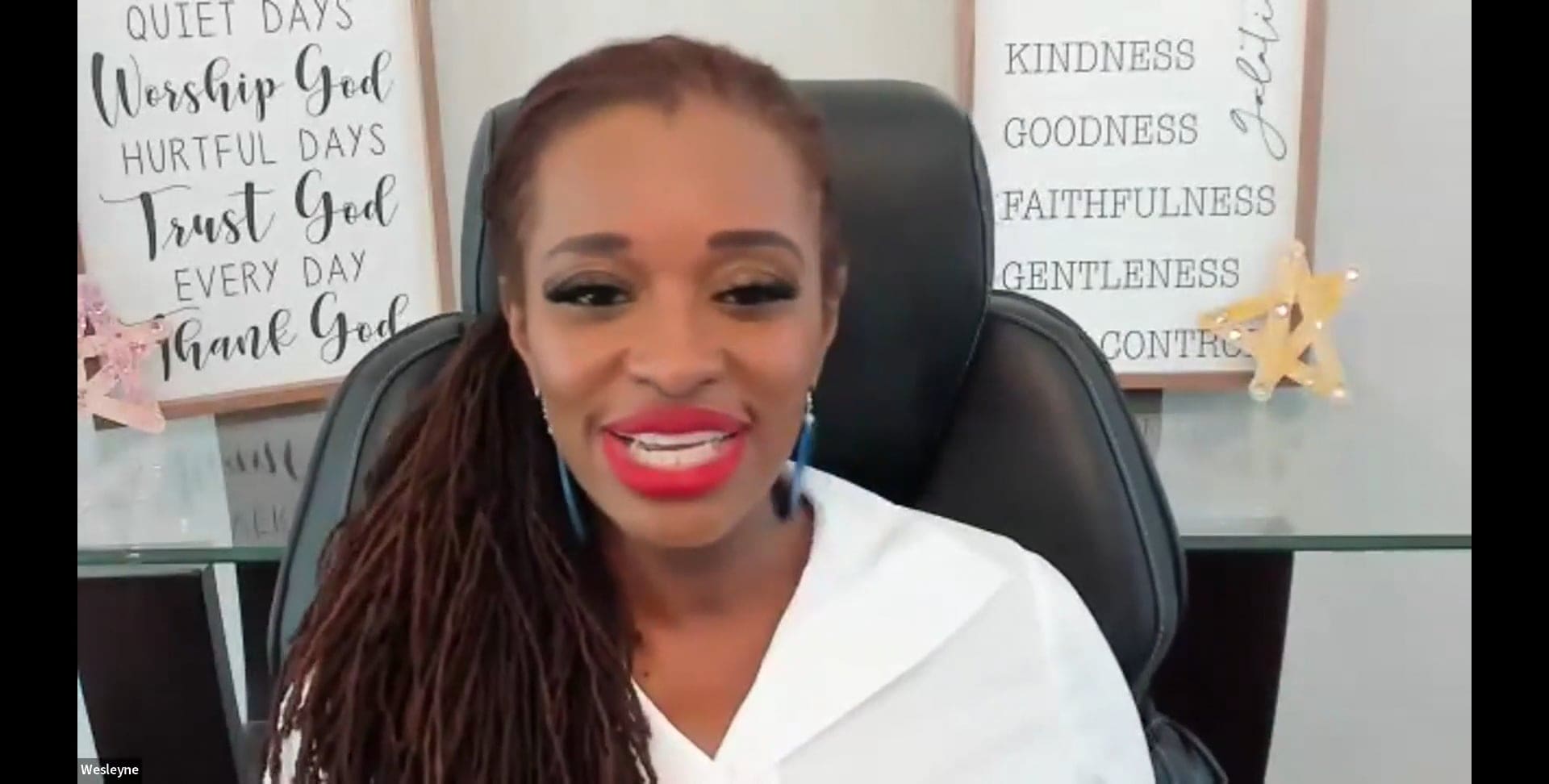
Sales doesn’t have to be scary. Just ask Wesleyne Whittaker, CEO of Transformed Sales. She’s a “recovering chemist” turned sales coach who helps small business owners grow with simple, honest strategies. Wesleyne shares her top 5 sales tips for creative entrepreneurs
1. Get Laser Focused “If you sell to everyone, you sell to no one.” Focus on your niche—one group of people who need what you offer. This helps you become the go-to expert in your space.and founders just starting out.
2. Target the Right Person Don’t aim for job titles—aim for personas. Who has the problem you solve? That person is your internal champion. Build a relationship with them and they’ll help bring others on board.
3. Teach, Don’t Pitch Use LinkedIn and social media to educate, not sell. When you teach real tips, people trust you—and when they’re ready to buy, they’ll come to you.
4. Speak Their Language Everyone buys differently. Some want email. Others want a video. Match your style to theirs. Sales is not about pushing—it’s about serving.
5. Schedule Sales Time Put sales time on your calendar like any other meeting. Even 15 minutes a day makes a big impact. The more you practice, the better you get.
Wesleyne’s sales tips big takeaway? Sales is about building trust, not being pushy. Help people solve problems, stay consistent, and the right customers will find you.
Key Highlights
• Introduction and Background of Wesleyne Whitaker 0:02
• Sales Basics and Targeting the Right Audience 2:21
• Building Internal Champions and Leveraging Social Media 5:43
• Effective Sales Strategies and Building Trust 13:21
• The Power of Personalization and Creativity in Sales 22:19
• The Role of Brand Promise and Value Proposition 23:08
• The Importance of Intentional Sales Efforts 39:42
• Final Thoughts and Encouragement 44:57
Transcription
Curt Anderson 00:02
Hey, John LeRoy apparel redefine man. How are you, dude? I’m doing great. Curt, how about you? Oh, my goodness gracious. Can Can you like my heart is like just beating through my sweatshirt right now. I’m just so excited. I’ve got my bestie, I’ve got my dear friend, my partner in crime. I’ve got Wesleyne Whitaker in the house here. Wesleyne, how are you?
Wesleyne Whittaker 00:21
I’m doing fantastic. Gosh. Well, hey, I know you’re super
Curt Anderson 00:25
busy. Thank you for taking time out your schedule to join John and myself for our conversation here today. So you are the CEO, the founder extraordinaire, of Transformed Sales. So let’s start here, Wesleyne, just talk a little bit about you were you’re a recovering chemist, as I like to say, corporate warrior, and then transformed yourself into this fierce entrepreneur, helping entrepreneurs and helping sales teams grow their sales. Talk a little bit about your background, and then we’re going to dive into some fun sales strategies. Yes,
Wesleyne Whittaker 00:55
so I am a recovering chemist. I started in the world as a failure analysis chemist, figuring out why plastic parts break. And I got curious. I was like, Man, I don’t I need some human interaction. So I stepped into sales. And when I got into sales, I finally figured out what I wanted to be when I grew up and I loved it, and that loved helped me propel from being an individual sales person to an international sales leader, and as an international sales leader, I was brought in to fix a team that was really struggling. And once everything got together, like they were selling, all the processes were in place, I got bored, so I said I could go do this for another company, or maybe I’ll bet on myself and see if I can do this for a lot of different companies, and I bet it on myself. Six and a half years later, I’m still out here working with organizations, fixing their broken sales processes and upskilling their salespeople.
Curt Anderson 01:53
Well, I love that good, good description of transform sales, and so I’ve had the honor and privilege of working with you for a number of years now, so I’ve had a front row seat of watching you grow your business. So you practice what you preach. Let’s run through you and I have a fun little stick on some basic 101, so for our entrepreneur friends out there that are maybe starting their sales journey, starting their entrepreneurial journey, maybe they’re like, very artistic, very creative, and they’ve come up with a really cool line, but maybe sales is not their stick. Let’s dive into some like sales basics, some 101, for our friends out there. What are some sales tips that you want to pass along?
Wesleyne Whittaker 02:29
So if you sell to everyone, you sell to no one. And what that means is you have to be laser focused on who you serve and what product or service you give them. And another phrase that I would like to say is the riches and the niches. So a lot of times, people feel like if I get too laser focused on just one type of person or one client, then I’m missing the whole wide world. And the key is, you want to be the biggest fish in the smallest pond. You want to be the partner for this industry and this product, that is the goal that you want to drive for people, you need to become synonymous with the product, right? So for me, I’m very much an Apple user. I’ve had Apple iPhones for probably 15 years. And so for me, when I think about technology, I think about Apple. I just go to the Apple store. I don’t even search Microsoft. I don’t search online, right? And that’s what you want your customers to do. You want to build that loyalty within them, so that they’re coming to you and they also have language to say, you do this thing like I know if I have a client that has trouble with eCommerce and manufacturing. Curt Anderson is my person, because he’s so laser focused on that thing
Curt Anderson 03:48
that’s excellent. So I want to, I want to dive in another step further there. And one thing that you’ve done a great job, top few things that you’ve taught me is number one, when you try to be everything to everybody, you are nothing to nobody, nothing to nobody. So I just want to, I want to, I want to just like, really bring that home. And again, like, even at my age and stage in my career, I still fall into that trap of like, hey, let’s serve these folks. Let’s, you know, so staying in that laser, laser focus. Another thing is, you know, so many of us are like, Hey, who do you target? Well, I’m targeting, you know, Operation folks, or HR, you do a great job, and you’ve really educated me on we’re not targeting a position. Who are we targeting? Yes,
Wesleyne Whittaker 04:26
so you’re targeting the persona. And oftentimes, you know, especially as entrepreneurs, you want to go to other founders, you want to go to the C suite. They don’t have time for you, like they’re not going to answer your emails and they’re not going to answer your phone calls, they probably aren’t going to take your meetings. So you have to think who is the person within the organization with the biggest problem that I can solve? Right? And so if I sell, let’s say I sell, I don’t know, outsource HR solutions, so I’m thinking about my target. Company who within that company is feeling the burn of not having HR support, maybe an HR generalist, the director of HR is just delegating all the work out to everybody else. They don’t care how it gets done. They don’t need your fancy software. They don’t care about that. So think about the person on the totem pole that has a problems, and they have the problems, and they don’t typically hold the authority for the budget, but the key is they can go get the right people on the team to sign off on the purchase order, to sign the contract. So when you shift the way you sell to who has problems, who has the issues, and who has time to solve the problems. Who really wants to lean into that? That is really how you start building out a sales pipeline that is repeatable, that you’re able to tap into have short, middle and long term opportunities?
Curt Anderson 05:53
Yeah, absolutely love that, John. Let’s get you on stage here. What are your thoughts? Is what our expert? Was this just fire? Or what, man, it
John LaRoy 06:00
is far because, I mean, I agree with you, and I feel like your personality perceives you, and I feel like you you now, then have to sell or train the person that you are contacting on how to sell that to the decision maker. Right? Absolutely. The bigger the organization gets, the longer that sales process can take. Yeah,
Wesleyne Whittaker 06:20
I have a name for that person. I call them your internal champion. So your internal champion, that is the person. And what you said is, right, John, you have to give them the words you need to have them, because they can get time on the CEOs calendar. They can get time on the VP of Operations calendar because they’re internal. And so they can put a 30 minute meeting on that calendar and say, Hey, I’ve been having this challenge, and I want to talk to you through some solutions. And so it’s your job as the entrepreneur, as a salesperson, to understand, okay, so you told me what your problems are. Now tell me what does the VP operations need to hear to convince him to take a meeting with me. What are the things and then you build that dialog so they literally have to sell you. My favorite example of an internal champion was a lady who was a VP of she was a VP of talent development. She texted me one day and she said, Hey, Wesley. I just got off a flight from LA back to Phoenix, and I was sitting next to this person, and he’s a Sales Director at another company, so for half of the flight, we talked about all the things that you did for us, and he wants to talk to you too. That is what you need. That is how you build a team of people. Like she’s sitting on a flight, and she’s talking about me because she knows the problems that I help her solve, and she also knows my ICP, so that’s what you have to do with that internal champion.
John LaRoy 07:48
Yeah, that’s awesome,
Curt Anderson 07:50
yeah. And especially in your in the apparel space, John, just think of like, how many folks are targeting bigger corporations or, you know, a school government agencies, where there’s different layers, there’s committees, and Wesleyan, I love you know, like you, and I think we’ve even used the word like that Trojan horse, like, how do you get somebody needs to get inside the organization to be that internal raving fan. So let’s talk a little bit about and please, you know, share any other tips, strategies, but let’s talk a little bit about marketing. Okay, so I would love for our friends out there. Connect with Wesleyan Whitaker on LinkedIn. You’ll thank us later. She is a woman of integrity, just a fierce educator. Great comments on a consistent basis with high level sales strategies. Wesleyan talk a little bit to our friends out there about like, educating and how they can come out to like, how do you start building those relationships from an online standpoint. So
Wesleyne Whittaker 08:41
the thing that is most important that I think a lot of people miss is they feel like, well, if I teach everybody stuff, then they’re going to go do it themselves, and they won’t buy from me. Those aren’t your clients. Those are not the people that you want. Just before we got on this recording, I would had a call with someone, and he literally said he I love your content. I get so much crap about all of this stuff and all this AI generated, but your stuff is so authentic and it’s so good. And at the end of the call, I was like, Hey, let’s keep this conversation going. Let’s talk, you know, in a couple weeks. And he was like, Well, can you send me some information about sales training? Was I didn’t even have to ask. I didn’t even have to ask why? Because he knows what I do, because he follows me on LinkedIn, and he knows the kind of content that I create, and he knows the impact that I’ve had. So use your social media platforms, and it’s not to be bragging, it’s how can I educate? How can I teach them something? How can I stay at the top of their feed, so that when they open their LinkedIn app, they see me right like, think about and again, we talked about those customers, those problems. So when you sit down with that internal champion and they say, these are the problems that I’m having. That is your content, you write to what they are having issues with. You don’t write about what’s important to you. What are the things they’re challenged with, and what are the successes, or what are the pitfalls, or, how have you helped clients like that overcome those things?
John LaRoy 10:10
How long have you been leveraging social media to do all that? And was there a time that you used other strategies before social media? So
Wesleyne Whittaker 10:20
the entire time I’ve been in my business, I’ve used social media. And I think even when I was just an individual salesperson, I used it because I saw how beneficial it was. So when I was a salesperson working for another company, I would do these Lunch and Learns because I was trying to build my business, and I was like, all I know how to do is teach. Like, let me teach you something. So I literally would fly all over the country doing lunch and learns, and I would get on LinkedIn, and I’m like, Okay, I’m going to be in Fargo this week. Who’s in Fargo that might actually want to attend this lunch and learn you get free food, you learn something. So that’s how I used it back then. I still do that now to find the people that I might want to invite to things or say share something. When I first started my business, I would say that my LinkedIn was not that great, because I didn’t really know what I was doing, but what I found out that I just had to do it. It was just a muscle I had to exercise. I just had a post. And back then, I was like, I’m gonna commit to posting two times a week. And I had my two times a week. I had videos where I was like, looking down. I had weird virtual backgrounds. I didn’t know what I was talking about. My camera was fuzzy. My mic was It was bad. It was really bad, but I did it, and I think that’s the key, just do it. Something is better than nothing, because your competitors are doing nothing. So if you do something, you’re in front of your potential clients.
John LaRoy 11:48
Yeah, I agree. I was, I was wondering, what was that impetus for you to start doing it like, you know, for me, it was Curt, right?
Wesleyne Whittaker 11:56
For me, it was like, so I heard people talking about LinkedIn and how it helps and this and that. And they were like, well, Slane, you have some really good topics. You should really start writing about these things. And I was like, Okay, I guess I have something to share. And so it was just like, hey, let me start doing this. And what I found was people started reaching out to me and asking me questions and saying, Hey, I’m thinking, I have this problem. Can you help me with this problem? Can we get on a call so I do not do outbound LinkedIn prospecting. I don’t do it. I’m not I can’t do I can’t do the spam. I just I practice what I preach, and I don’t like it, so I don’t do it. And but what I do do is I start genuine connections. So if I see somebody’s host, I’m going to talk, I’m going to comment on the mic. Connect. Hey, can you join my network? Something like that, and we’re having a real conversation. It’s no automation, because the thing about LinkedIn or any social media, it’s social selling. You can’t use a computer to be social. You have to do it yourself. You are the part of the social right, and so that is the key that I think a lot of people miss. They try to automate so many things, and it removes the personal element, and that’s why it doesn’t work.
John LaRoy 13:13
Yeah, I agree. You know, I feel like the the internal notification system goes off like when you just, you could see, feel like the spamminess, even if it’s, it’s getting somewhat more personal, but something in you just can determine and see the the AI, you know, behind it, you know, it’s interesting.
Wesleyne Whittaker 13:35
Yeah, you can, you can see the the that note that somebody just typed in a little sentence into AI and got a whole post, and it’s like, no, no, no, no, no. And, you know, I think that, and for me, the way that I leverage AI, like my chat GPT knows me, so I can say that’s not my voice. And like, you’re right, Wesley, you’re direct but empathetic with this kind of tone, right? But if you don’t train it, then it doesn’t know you. So you really should not use it for those things. And I always have something I’m like, make this a little bit better for me. Use my words only, though, don’t research. Like there are things that you can do to leverage the tools that we have.
John LaRoy 14:13
How do you how do you work with, kind of like, the emerging sales force, and also the emerging buyer, right, that wants a little bit of autonomy, right? You know, this face to face, even though it’s in face to face, is digital. Those people that want kind of like three separate types of sales, where it’s autonomous, where I can just go on to a platform, leave me alone, and let me do what I know how to do, versus the face to face, you know, and then versus, kind of like a hybrid of that, like, guide me a little bit, but not all the bit, you know, because I feel like there’s, there’s more and more of that happening, either subliminally or in your face, where the old days are, like, show up at your doorstep to sell you some napkins. It’s like, Listen, if I have a portal, I can go order those napkins. I don’t need to see you. I. But if we’re looking for new restaurant equipment, and it’s, you know, high end and it’s a big ticket purchase, I need you to guide me through it. So
Wesleyne Whittaker 15:08
I think that there are a couple things here. So the first thing I’m going to say is you have to map your customers buying journey to your selling journey. So it’s not just my sales process, it’s not just my sales playbook, it’s this is how I sell, and this is how they buy, and you align those things, right? And I think it’s important to realize that whether somebody wants to see you or not, you have to touch someone at least 10 times before they are in the bag, if you will, right? So if that’s showing up, maybe that’s hair. I have this wonderful cup, and I decided to make you a cup that has your personal emblem on it. Uh, somebody literally made me a cup, um, because I got myself a purple unicorn. So it literally was a cup and it had a purple unicorn on it. And I was like, Oh my gosh, it’s so cool. And so what does that do? It solidified. Oh, he can make really cool stuff just on a whim. So how the question you ask yourself is, how can I bring them value? So can I send them a checklist with for me, like 1010, sales habits that you need to employ daily, right? So I’m not asking for anything from them, but I’m just saying here, 10 checklist, I’m inviting them to a webinar. I say, Hey, I wrote this cool post, and I thought you might be of interest to it. The key is, you’re not pushing, you’re not selling, you’re serving, you’re educating, you’re moving them along their journey. Because we have to understand that the first step is their awareness. Once they become aware of you, then they have to build trust. And that’s the asynchronous part that in today’s digital world, that trust building is very much they do it themselves. So how can I add value to them to build that trust? So when, like the call I mentioned, it’s like, can you send me something about sales training? Never, one time in the call that I even mentioned sales training, but the trust that I built up, he knew, like she can do this for me and we need this so that, I think, is the key. And it’s also understanding how your ideal client consumes information, because if you’re selling to engineers, they’re probably never going to want to talk to you ever. They want emails, right? I sent an email. It’s an existing client, but her background is in accounting. She likes words. If I sent the same email to somebody in marketing, I would have recorded a video. It’s not about how I like to communicate, it’s how they like to communicate, right? And I think that’s really key communicate in the way they like to communicate.
John LaRoy 17:47
Great stuff. Yeah?
Curt Anderson 17:48
This is dude, yeah, we got it. You. Everybody needs a little little bit of Wesleyan in their life to get fired up. So John, I want to show the power of link. Since we’re talking about LinkedIn, I’m going to show you, then Wesleyan was talking about, she doesn’t do a lot of outbound, but she loves connecting. Wesley if you don’t mind, I’m going to share the story of when you and I connected. And Jen, this is hysterical, right? So I’m going to show you. So I’m going underneath the hood. So this is mine in Wesleyans, and this gentleman here on the far left was a mutual friend. He had. I’ve known him for years. He had just met Wesleyan, somewhat recent, and he’s the master connector. I don’t know anybody that’s a better connector than this guy. He drives me. No, hey, Curt, I want to introduce you to Wesleyan. She does a podcast, blah, blah, blah. I’ll leave it to you to to discuss. Now, here’s a couple things that I wanted to hit. You know, if you can be the matchmaker, you know, if you can come in and be like, Wes think is like, how many times does she use that word trust, right? So now Dan bigger has earned people’s trust because, like, he’s just like, that unapologetic go giver. Okay, so when he says, like, you need to meet this person, guess what? Like, I’m meeting that person. And thankfully Wesleyan did as well. So she comes in, hey, Wesleyan, fantastic profile, blah, blah, blah. Now check this out. She says, girl Dad, that’s the first thing on my profile. That’s like, the like, when you meet me, that’s the first thing in my life is I’m a girl, dad. I love it. I’m a boy mom. So now she’s establishing a mutual bond and a connection between us. Okay, so now we come back. I would love to continue our conference. This is after we talked like we were like total soulmates, right? On the first conversation, right? She says, I would love to have another conversation. We have a lot to talk about. Wesley, what do you anything that you want to add here so far? No, you’re doing great. Okay, so now she comes in, she goes, I enjoyed chatting with you, too. Thanks for not so much for the information on the MEPs. Now the MEPs, John, that’s how you and I are connected. Is that’s iMac. Okay, there’s a these are the manufacturing extension partnerships. This is a massive organization that helps manufacturers throughout the United States. They’re in all 50 states. There’s 1300 employees, just a wonderful organization. John, what? What would you say about iMac and the MEPs that’s been. A bit of friend to you, right?
John LaRoy 20:02
Absolutely, you know, I feel like, especially here in in Illinois, there’s a negative connotation on the government, and especially in Cook County, and it was a welcomed breath of fresh air to see a an organization that really like does what they say, right? You see, you turn on TV, especially during political cycles and election time. We’re doing this for small business. We’re doing this, and it’s like, okay, how do you access it? How do you who can you talk to? And you know, we were blessed enough to kind of stumble into iMac and very quickly, without a lot of red tape, without a lot of back and forth, we were able to access some amazing programs, in addition to what we’re doing with Curt cyber security and planning out a new facility. So yeah, it’s it’s been phenomenal. So
Curt Anderson 20:54
few takeaways here is number one, if you can be the fierce connector. Number two, if somebody that you trust says, Hey, you should meet this person. I encourage you meet that person number three. Reach out to those organizations, small business development centers, your local chamber of commerce, manufacturing extension partnerships. So John, you ready for this? So the Manufacturing Extension Partnership, 50 states, 1300 employees nationwide. They have an annual conference every year. Okay? In 2023 the conference was held in Buffalo. Guess who was the keynote speaker?
John LaRoy 21:29
I’m guessing you. Yeah,
Curt Anderson 21:30
I’m sitting in the front row. So Wesleyan calls me uncle Curt. And so I do like I’m not ashamed to say I’m in the front row. I literally have tears going down my I’m so proud of Wesleyan. Wesleyan, you absolutely crushed it. But just share what was your experience doing the MEP keynote speech here.
Wesleyne Whittaker 21:48
I mean, it was, it was fantastic. And I would say that, you know, just looking at those dates, that was two years later. So the the power of knowing again, I know who my audience is, and I know what I’m really good at, and I’m able to translate that very well. So when the opportunity came for the MEP keynote, it was it was easy, right? It was easy because I already built trust with so many people across the MEP network, and so a lot of times what happens is we’re very short sighted, and we’ll do a little bit of something and we’re like, oh, that didn’t work. I’m gonna stop but you have to keep planting seeds, and you have to keep nurturing relationships, because you don’t know when something is going to come out. I closed the deal last month for someone that I’ve been having conversations with for three years, and 10 minutes into call, they were like, I don’t need to hear anymore. I’m just send me the contract, right? But it was, it wasn’t 10 minutes in a call, it was three years of building a relationship. So you have to remember that sales isn’t always quick, and you really have to invest time and energy into the right kinds of relationships so that you can ensure that you’re getting something out on the other side.
2307
Yeah,
Curt Anderson 23:08
I love that because, John, like, in the Imperial space, you know, like you always say it’s like, you’re, you’re not selling, it’s not just a piece of clothing, right? John, what do you what do you call it? Right? Selling a memory. Yeah, selling memories, right? It’s the brand. New promise.
John LaRoy 23:22
Say that again, most of the time you’re selling a memory, it didn’t even happen yet. You know, it’s like when they’re getting their shirt and we’re making it that event or that specific time and place hasn’t happened, but when it does, you have a special part in it, right? And that’s one of the things that we coach up our entire staff, especially young people that come in, and, you know, we work with a lot of high schools, work with a lot of, you know, partners of iMac, right, where you have kids that come in that, you know, maybe come from troubled backgrounds, or do come from troubled backgrounds, and introducing them to a manufacturing setting where they can make a career, and it’s not just a job. And you look at, you know, a manufacturing setting, and there are, you know, it’s not the, let’s not hide it. There are repetitive processes that happen. But if you can tie and it’s not just, it’s not just words, right? There’s actual meaning behind it. I’m like, if you think back to some of your best memories in high school, grade school, whatever, I guarantee you can remember what you were wearing, right? And they’re like, Oh my God. I’m like, now you have a hand in that. You know when that, when that kid at a freshman baseball team gets called up to varsity and he holds up that varsity jersey, or the coach gives me that varsity jersey, that memory is etched in his memory forever, and it’s special. And you know that you had a part, you sold that letter, you printed that number, or you folded it and put it in a bag, like, that’s special. And you can turn on TV, and you see, on Saturdays, your work, you know, or you walk down the street, you go to a restaurant, you know, I printed that So, right? It goes from like their eyes are kind of sunk back in their head, or like, I gotta do this now, and it’s like, I gotta go to work. It’s like, yeah. But then it’s like. Oh my god. You know, it kind of opens up their eyes into how much more of an impact they actually have, not just internally, but externally as well.
Curt Anderson 25:08
That’s good. Yeah, good stuff there. So let’s talk about brand promise. That’s a line, John, that you introduced to me. Absolutely love that line. And so, Wesleyan, you know, you do an amazing job, as a matter of fact, and I know you’re super busy, but I’m going to pull up your LinkedIn profile in a minute here. But just talk a little bit like, when you’re working like as you’re building your company, as you’re working with your clients, you know, you’re a woman of integrity, you’re a woman of trust, you’re just a fierce, you know, just so dedicated to your clients. Just talk a little bit about the brand promise for you at transform sales, and how you bring that to your clients as they’re trying to exude that trust when you’re building up their sales teams. So
Wesleyne Whittaker 25:47
I don’t know if I have a nice elephant brand brand promise, like John, but as you were out talking through brand promises, what really popped into my brain is I won’t take people’s money, if I don’t believe in their transformation. So there are a lot of sales companies, sales strategy companies, they’ll just take money and they’ll say, Oh, this is fine. Yeah, there’s there. There are specific instances that I can point to. One, I remember doing a training for a company that sold garbage trucks. And after the training, I was in a tiny town in Tennessee. After the training, I sat down with the director of sales, and he said, Okay, so what are the next steps? What does the coaching program look like? And I said, you should not invest in this team, because they’re not going to help you achieve your goals. And he looked at me and said, what I was like, this is not the team that’s going to help you get there. They’ll maintain the business, but they’re not going to grow, and so I’m not going to take your money, because what’s going to happen is you’re going to be frustrated and you’re not going to see the growth, and I already see that here. So for us, it’s real. For me, it’s really important that when we work with clients, I ensure that they’re the right fit for us. I move really, really quick, just as fast as I’m talking now, that’s how fast I’m moving when I’m teaching, I’m training. And so if your reps, if you as an entrepreneur, if you as a business owner, don’t have the propensity to change, if every suggestion I give you, you say, but what? But no, I don’t want to do this, but we’re not the right fit, and I’m okay with that. And I think that knowing that for me, like I firmly believe all business is not good business, I walked away. I said no to people. I went through a contract, I was going through a contract negotiation with a company, and I said, Actually, I’m gonna have to walk away from this. And she was like, what we spent all weekend marking this up. I said, the way you marked this contract up, I’m not trying to work with you, because this is going to be a disaster. Every small little word. So I pay attention during the sales process to really gaze is this somebody that I want to work with? And I’ll say that I don’t take it for granted that I’m at a stage of my business where I can do that. Now I wasn’t always able to do that because I had bills to pay. So one of the things that I encourage entrepreneurs to do is really understand early what good business for you looks like. Because if you understand the kind of people you like to work with, the kind of projects you like to execute, the kind of environment that you want to create, it makes your whole company better, because your that your employees aren’t stressed out. You love coming to work. They love coming to work, and your customers feel delighted. They feel the positive energy from everybody within the organization.
John LaRoy 28:30
It is transformative. But I’m glad you said what you said, because I feel like there’s not many people that have that opportunity, an entrepreneur, in an entrepreneur journey, to start out like that, right? You I think you go from saying yes, saying yes less, and learn how to say no, right? And it’s like, it’s, it’s, it takes time, especially in a production and manufacturing, right? You know, you have this talented staff, you create this beast because you want more volume, you got to feed the beast, right? So you get in this trap of saying yes, and it takes time say yes less and then say no. And it’s, it’s difficult, but you’re right, you know, it’s like you start seeing people like, why are we taking this job? Why is this restaurant? Is this guy coming back? Is she coming back? You know, so. And I feel like, once your team can buy into that and understand who is your right client, who is why have we niche down here doesn’t make sense. And then you get other people other than yourself, like, hey, this isn’t, this isn’t the person that meets what we’re trying to do, and we’re saying that we’re doing. Why are we taking it on from you know? So it’s interesting, but yeah, you see that transformation across the entire industry, if you have the right people. But quick question, back to when you were with the garbage truck company. How long did it take you to realize, like, not going to work here? Like, was that, like, you just couple questions, got some resistance, and you’re like, I can’t change these people. So it was a day, not that you can’t change them. They didn’t want to be changed. So it was a day to have training,
Wesleyne Whittaker 29:57
and I’m a really good job. Of people, and I would say probably around three, three to four hours in, that’s when I could see I was like, Yeah, this is gonna work. And it always the telling sign is when I start pushing them out of their comfort zone. And I’m like, okay, so um, you guys need to get out of the office more and stop seeing the same people for this particular company, you guys are just going to see the same people all the time, and that’s not going to work anymore. Let’s build this prospecting plan. Oh my goodness. The uproar, the pushback, the what I don’t have time. We have this. So I literally had to pause the training. I paused the training. I said, so let’s take a commercial break. Your leadership team is in here. Why don’t we openly share the challenges that you’re having internally that are preventing you from selling. And I let them do that for about 45 minutes, and then afterwards we came back, and they were a little bit better, but they kept going back to remember, remember, I told you, every time we placed an order, this happened. It was that so. And these sales people, I mean, this was an older sales force. Some of them had been selling longer than I’d been alive, and so they were very, very stuck in their ways. And the challenge was, when you people came to that team, those older sales people were squeezing them out because of their mentality. So that’s why they were in that place that they were in. And so what that actually boils down to is leadership. And so I told the leadership, I said, You need to turn this team over 100% he was like, what? I said, You Curt, like, what? Yes, I said, You need to turn this team over 100% and he wasn’t willing to do it. He wasn’t even willing to say, Okay, are there some people that are redeemable. And so I have the the actual this is what I experienced in the sales training. And here’s the data, because I do assessments and evaluations on every team that I train, and I said, the data matches this. There are very weak sales force, and you need to grow this, I think was like 30% over the next two years. I’m like, Come on, guys. So anyhow, Yeah,
John LaRoy 32:02
amazing. Yeah. I feel like our industry too, especially in the athletic space, where we niche down, you have guys and girls that have been in the industry, and a lot of it’s family owned, right? And they’ve been doing something the same way since the 80s, and it’s worked. You know, they have a successful small business, and nothing had really changed, even with the advent of the Internet, up until about like 2011 2012 where you introduce e com to the athletic High School collegiate space, and just trying to get guys and girls to adopt how to use a web platform in in a lot of small businesses that had never used anything other than pen and paper. It was, it was crazy, right? And the adaptation post 2018 2019, has been exponential, right? You had one company really kind of offering what essentially is like Shopify for for high school and team sports. And now there’s, like, probably, like, 15, and it’s, it’s crazy how much Tech has enabled the game. And if you are not using you are, like, now you’re a dinosaur. And even though, like, there’s a lot of people that still say, hey, like, I like to do it the old way, and you still can, but that buyer of old way is almost out of the game, right? So you need to, again, speak to a way that customers want to be spoken to. If you don’t have you know every, I think probably everyone in the United States is probably ordered, or know someone that’s ordered from Amazon. So if you can’t, at least have that MVP part of your business, it’s a problem
Wesleyne Whittaker 33:39
if it’s not quick, if it’s not fast, because we live in the I ordered my son a birthday gift recently, and I actually ordered it from Walmart, and it said it was going to be here in three hours. I was like, Wow, you really? But the thing is, Walmart and Target are smart, because they’re trying to be Amazon. Amazon does same day, but you usually get it a few hours later. They’re like, but we can be faster. And so it’s, what does my customer need? And how can I be better than my competitor? It’s not just about the customer needs. You also have to see, well, what is my competitor doing? And so they’re getting faster, they’re getting quicker. They’re getting better because they’re trying to take some of that Amazon business. Yeah,
John LaRoy 34:17
it’s crazy, and it’s like in an industry where you need to add value to that product. I talk about the Amazon effect in our industry all the time, because when I first started, 2005 six, a three week turn was acceptable. And like, we get a product in, we have to add value to it and turn it around. And people are like, Well, why can’t you do that, like Amazon in three hours? And it’s like, you know, it’s made us better. And it, they don’t care. You know, at the end of the day, it’s like, hey, if someone else can do it, you can do it, and there’s no need for explanation. So in this 19 years, you know, we’ve gone from three weeks to one week, I’m sorry, two weeks to one week, to now, like three or four days. And there’s still room for optimization. But then there’s also. Like, what? You can’t have all three. You can’t have quality, speed and price, right? One of those three legs of the triangle usually gets sacrificed, right? So we really focus on quality and speed, and you’re not the right customer for us if you want cheap.
Wesleyne Whittaker 35:14
And that’s the key, it’s it’s okay if you can’t afford me, I’m good with that. I’m not lowering my price because I lower my price, that means some of what I’m offering you, I also have to lower that too. So I think that it’s important to what is the, what are the the pillars that you want to hang on if you want to be the lowest cost option, that’s fine. Just remember, if you win on price, you lose on price, and it’s a race to the bottom. Sure. So if price is what is motivating you, it’s always brace to the bottom, and you don’t have enough value there. If you’re a value seller, you have to balance the amount of value. So I talked to this person recently, and he literally said it was kind of something that you said, John, the the product that they manufacture, it lasts like 50 years. And so a lot of the people who ordered in the past 20 or 30 years, they’re retiring out the new generation doesn’t really they’re like, I don’t need it to last 50 years. It doesn’t matter. And he said his sales people are still selling that and they’re losing business. And I’m like, that sounds like a big problem. Sounds like you need to update your value proposition, because sometimes I need it to last for a year, and sometimes, if it lasts for three months, I’m okay. So understanding what your customers actually need, right? Like, how much value do they need? What’s the longevity of the product that you’re producing? How long do they need it to last for? Is really important, because if they, if most of your customers don’t need the longevity, then maybe you can have cheaper starting materials so you can lower your price. And I think really understanding those things are really, really key
John LaRoy 36:52
gospel here. Curt,
Curt Anderson 36:54
master class, dude, it’s a it’s just, I think we
John LaRoy 36:57
got a new pope.
Curt Anderson 37:00
We’ve got a new poker so I know we’re coming into time. And you know what was saying? We might have to have you back, because I wanted to talk about LinkedIn. We got into John, we got into LinkedIn a little bit with my our dear friend Damon, a couple weeks back. And so I’m just, I’m going to share this real quick for friends checking in. So check this out. So when you go right to my feed, who’s the first person on my feed is my bestie, Wesleyan, and here she is. And Wesley, you do an amazing job. I was just signed with a client three hours ago. We were doing a little bit of a LinkedIn training, and who’s what, whose profile did I pull up, yours and what I love here. So I just, I wanted to hit this real quick. Look at this wonderful banner she has at the top, and look at her headline here. I help field sales teams generate Predictable Revenue without random acts of selling. I mean, very specific, very concise. This is my superpower. This is what I do. She comes down you come down here, and she has a wonderful about section. So Wesleyne, we’ll have you back, because we don’t we. I know you guys are busy. We need to wrap up. But you know, anyway, let’s let me come back to you here. John. Thoughts, comments, I know we need to wind down. I have one last question for Wesleyan, but what are your thoughts? Comments, as we were winding down our conversation here,
John LaRoy 38:11
I have a question for Wesley if that’s okay, please. So you work with companies all sizes. You’ve been doing this for a long time. When companies talk about, like you said, at least 10 touch points, right? And I feel like most people now are leaning more into a digital touch point, more than you know, old school face to face, but again, understanding where that client wants to be spoken to and how they want to be spoken to. How, how much do you see brand recognition, brand prominence, you know? Because when we talk about our industry, and we talk to certain companies like, Hey, I don’t have the budget of Oracle, right? What can I do to compete in the software space if I can’t put a Super Bowl ad out, right? You know? And it’s like, again, we go back to that brand promise. But how many, how much do you see people using merch or branded apparel, promotional type items as part of their marketing strategy or their outreach outreach strategy. And do you see it still being effective?
Wesleyne Whittaker 39:10
I don’t think people do it enough. I still, I guess, I mean, I’m not that old, but I feel a little bit old because I still think that there is so much value in somebody getting something in the mail, because they just get so much junk, which, most of your mail is junk mail, and so a handwritten note, a a koozie, or, Hey, I noticed on your LinkedIn that you’re an Ohio State fan. I just, I found I wanted to send this to you, right? So, and having your your business card in there, or something like that. Because, like, I’m sitting here looking at my desk right now, if somebody sent me something that sat at my desk, and I saw it every day, and I’m like, Ah, I need that person. And maybe not today, but in three months, when I look at it, I need them. And so we think about our 10 touch point, you really want to be very strategic with how. You’re using merch, right? And I think you gotta be really creative. You really have to get different, like some really cool things that I’ve seen before, like somebody who has a might read a really cool book that they enjoy, right? So let’s say you’re reading a book that you enjoy, and you know, you have a very select number of people. Maybe it’s 10 people could be like 10 people. What you should do is open the book up to a spot that you found really cool. Don’t write in people’s books, because some people are weird. Put a sticky note and then have a bookmark with your company’s information right there. What is that going to do? Shows I know that who you are. I know that you value reading. I know that this is a problem that you have that may be interesting to you. And then my company, my that bookmark is just sitting there, and that doesn’t cost a lot, right? Yes, you buy the book, you have to pay for the shipping, but printing up a whole bunch of bookmarks, that doesn’t cost a whole lot. So when you think about it like that, be creative, and that’s why it’s so important to step into the mind of your prospect. What do they enjoy? Is it? I know they like golfing. Let me send them a set of golf balls. Whatever it is, think about what is important to them? Yeah,
John LaRoy 41:12
it’s it’s crazy. I mean, I won a couple really big accounts when I used to have a partner, thought I was crazy, but this was like when podcast worlds were just starting to explode, like 1617, and I would just people I wanted to do business with. I’ve listened to a podcast, right? And this one customer, Curt, we had him on, Brian Slater, he was, he was on a real estate podcast because he was the number one moving company in the city of Chicago. And he said one of the guys that was on a podcast, he had three questions, like, hot, hot, hot, round, whatever. Like, who’s your hero? Who’s this? Who’s this? If you had one superpower, what would it be? And is the movie short circuit? And he talked about being able to, like, you know, just look at a book and download it, and having to read it, right? Like, that’s the superpower you’d want him. Like, that’s really good. So then I went online, and our superpower like being able to print a t shirt in an hour, we printed a t shirt of short, short circuit. My favorite superpower, I sent it to him, and, you know, he’s doing a ton of business with a different company, and he got the box, open it up, called me. He’s like, this is incredible, you know. And it literally took an hour and a half, and it was just a certain touch point that he’s like someone cared enough to pay attention to this, and it resonated with me. And we do that a lot, and I don’t have 100% success rate on it, but pretty you know, definitely over 50 and works, yeah, yeah.
Weslyene Whittaker 42:36
And if you think about the return on that investment, if you spend that amount of money in ads, the return on your investment is not going to be a 50% conversion rate, right? And so it’s that personal that it’s the extra step because most people aren’t doing it,
John LaRoy 42:51
yeah, yeah. Petrobek, David, you ever? You ever follow him? Yeah? Yep, yep. So one of his things was, when he was early on in the selling days, he would mail a shoe, one shoe, to a prospective client, and he’s like, I got my foot in the door, you know? And it’s like, pretty crazy, like, you know, it’s like, stupid stuff like that. But again, the other guy from rpm, Chicago, I forgot his name, but he would, he’d email or he, he put a package together of glasses and a pencil, and he’s like, I encourage you to take a sharper look at my proposal. And, you know, just really creative things that there’s really no no end.
43:35
Yeah, yeah, that’s awesome, yeah.
Curt Anderson 43:38
So okay, I know we’re at time. So what, John, what a what a master class. This is just such a gift. So Wesleyan, any parting thoughts, words of wisdom that you want to share as we close
Wesleyne Whittaker 43:49
out? Yes. So sales feel scary to many entrepreneurs, many people who have to sell. And my advice to you is you must do something. Don’t put your head under the sand. And really be intentional. You book meetings with prospective clients. You book meetings to go get your hair done, go get a beer cut, whatever. Put a sales block on your calendar. Be intentional about it. So do your outreach. Then really be focused on your top of the funnel growth. And remember that good close rates, good conversion rates are like in the 33% having 100% close rate means that you are not going after enough risky business. Having anything under 30% means that you need to tighten up something in your sales process or sales pipeline, but target 33% get out there, talk to people, lose some deals, win some deals, and really refine and tighten it up as you go.
Curt Anderson 44:53
Awesome. All right. Wesleyne, thank you. Thank you, John. I appreciate you so much. What a master class, if. Our friends out there, if you came into this late man, go back to the beginning and catch this entire thing, because you too will take your business to a new level. So alright, we will catch you next time with another I don’t know if we’ll top this one, John, but we’re, we’re certainly going to keep trying, man. So thank you, Wesleyne. We appreciate you again. Connect with Wesleyne Whitaker on LinkedIn. We’ll have her website, all of her socials in the show notes down below, and we will catch you next time.